Tuesday, 24 January 2017
Troubling times
I was going to try my best to fill this blog with optimistic news. I was going to mention how excited I was with my new project and the fact that I am closer to finishing my masters but today I learned about the EPA being frozen. People say it's not really a big deal but I am here to tell you why it is.
Unfortunately a large amount of grant money that funds environmental research comes from the EPA and other federal foundations. The lack of funding means that a lot of research has been halted and alternative funding sources are going to get a lot more competitive in the future. This means that research that was vital may be sidetracked for something deemed to be more important by the funding agencies that still work. All of us in the research departments already know how competitive grants are and with a freeze this big it means a lot less research is going to be carried out.
The hiring freeze will also have a lasting impact. The sector is highly competitive when it comes to jobs and this freezing means that people trying to work for the environment will have to take any job they get which means that less and less people will be hired and therefore will be proved to go into the private sector. While that's not necessarily bad, a lot of people that hoped to work in Government agencies(myself included) will have to compete twice as much.
It's hard to say exactly what's going to happen. However the record shows that the current administration will probably work more for money rather than the protection of the environment. This isn't particularly encouraging when you consider that some of the chair positions don't believe in climate change which is deemed to be the most worrying subject in the research community. It isn't always gloom but these are the times we live in. All we can really hope for is to fight for the environment and what it stands for.

Wednesday, 28 September 2016
Millennials and wildlife
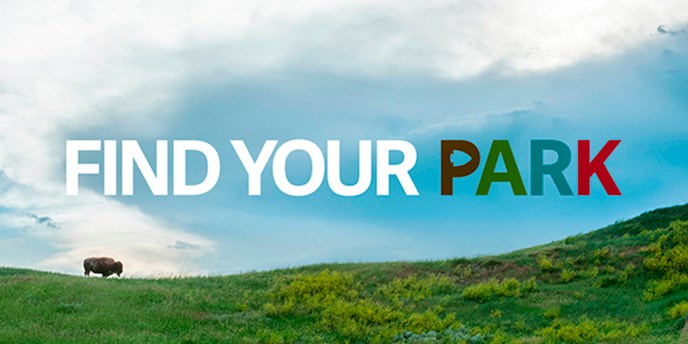
Recently a trend that starting popping up on my Facebook and Twitter feed involves a series of articles and studies on how Millennials are having a hard time engaging with nature. A few articles such as National Geographic try and create a picture that the millennial generation needs a different encouragement to engage and visit National Parks. Others such Business Insider just say that Millennials simply don't care about nature. I thought I would just give my two cents on the subject while trying to be as civil as possible.
For starters let's start with the obvious which is the socioeconomic position that Millennials are in. Many people in this current generation are struggling to find jobs and to support housing etc. If you do happen to get a job it's often one that doesn't pay a lot and demands a lot of your time. So in my opinion one of the main reasons why Millennials aren't in National Parks every weekend or are out experiencing nature is because we simply don't have time. If you get one day off after an eight or twelve hour shift then it's most likely that you will use that time to do chores around the house or catch up on your social life. Let's not forget that a lot of jobs nowdays are often taken home. By that I mean that even if your 9-5 job is done, most jobs have documents etc that you need to catch up on.
Despite that fact that National Parks are a relatively cheap destination backpacking and camping aren't, You need a car or mode of transportation to reach the area and if you want a good set of hiking books, a good backpack and a decent sleeping bag and tent then it all adds up. Sure it's often a one off investment since these items tend to last for a long time but the initial investment can be steep for someone barely scraping by(which is often the case with Millennials).
It's always the case with these articles that go after a newer generation. If you decide to tour all National Parks and engage with nature you are called " lazy" and that you live off your parents' money and aren't contributing to society. If you decide to work then you don't engage enough with national parks and so forth and so forth. It's a vicious cycle that simply won't let go.
Now on to another issue. The fact that Millennials need to be always plug into the grid. That Millennials won't visit wilderness areas because they get no signal. This is true for some people that's not often the case. The ability to disconnect is in fact one of the reasons why myself and friends enjoy visiting wilderness areas. The ability to zone out, sit down and stare at a fire or read a book by the coast is a small luxury in a world that is often over flooding us with information and news.
I also want to say that although our generation seems to be on the grid, it doesn't mean it can't appreciate wilderness. There are entire websites, subreddits etc dedicated to the beauty of nature. At any point during the day I can view pictures of mountain ranges, forests etc that I have never visited before in my life. I can have a much broader perspective of the world and of nature. I can watch scenes featuring wildlife that I will probably never have a chance to witness in real life. The idea that we are a generation obsessed with staring at our screens needs to stop. Some of us may be but then again every generation has some rotten apples.
Campaigns such as #findyourpark, help engage those of us who may have never considered visiting a park or had no idea how close a national park is to them. However ultimately I think it's up to the parents as well as your age. When you are a child you find nature wonderful. As you grow up new experiences tend to take preference over nature. There are electronic games and later on flirting and drinking. That doesn't mean that our generation doesn't appreciate nature. It just means that for some time we choose to focus on something else.
Perhaps another fact which makes it seem as if millennials don't choose to hang out at National Parks is the accessibility of travelling. It is easier than ever to jump on a plane and go somewhere you have never been before. Sure it takes money(see my point above) but if you can do it then why would you visit a local National Park? The park will be there when you return but a cheap ticket to the otherwise side of the world is fleeting. So most people my generation tend to travel when possible because we all know that eventually travelling won't be as easy. Whether it's family, a job or simply age, travelling is a concept that always seems like it's going to experience. So we opt for that option because the local parks will always be there. Perhaps a better way is to explore whether millennials attend other parks abroad. Perhaps some sort of age study may support my thoughts.
Overall though it's a false accusation. Our generation has embraced National Parks, public lands and wildlife as much as any other. Online campaigns to stop cullings, to stop pipelines and to preserve public lands are thriving. For us national parks aren't just a place to visit but also a place to defend, write about, tweet about and facebook. We share our information fast and we like getting information fast. However in the end of the day when we are around a campfire staring towards the beautiful landscape of Yosemite/Yellowstone or in my case the West of Scotland, everyone falls quiet and just absorbs nature. As much as other generations want to separate us from nature, the primordial spirit will forever be there.
Perhaps another fact which makes it seem as if millennials don't choose to hang out at National Parks is the accessibility of travelling. It is easier than ever to jump on a plane and go somewhere you have never been before. Sure it takes money(see my point above) but if you can do it then why would you visit a local National Park? The park will be there when you return but a cheap ticket to the otherwise side of the world is fleeting. So most people my generation tend to travel when possible because we all know that eventually travelling won't be as easy. Whether it's family, a job or simply age, travelling is a concept that always seems like it's going to experience. So we opt for that option because the local parks will always be there. Perhaps a better way is to explore whether millennials attend other parks abroad. Perhaps some sort of age study may support my thoughts.
Overall though it's a false accusation. Our generation has embraced National Parks, public lands and wildlife as much as any other. Online campaigns to stop cullings, to stop pipelines and to preserve public lands are thriving. For us national parks aren't just a place to visit but also a place to defend, write about, tweet about and facebook. We share our information fast and we like getting information fast. However in the end of the day when we are around a campfire staring towards the beautiful landscape of Yosemite/Yellowstone or in my case the West of Scotland, everyone falls quiet and just absorbs nature. As much as other generations want to separate us from nature, the primordial spirit will forever be there.
Monday, 8 August 2016
Should California reintroduce Grizzly Bears?

It's been a busy month for me. Between the job and my Masters I hardly had time for thinking about wildlife. However recently I became aware of a new campaign that attempts to bring back the Grizzly Bear (Ursus arctos) back to California. For those not aware, the grizzly bear is part of the Californian state flag and features in a lot of paraphernalia regarding California. However the actual species has been extinct since 1922/1924. This was mostly due to gold fever and the human settlement in California. Human presence meant that grizzles were rapidly hunted and persecuted.
Now a new movement seeks to reintroduced the grizzly back to California, thus restoring some native pride and increasing the biodiversity. I have to admit that I don't think it's a good idea just yet.
First things first, the habitat proposed is in the Sierra Nevada mountains. Whilst there is ample habitat there, it neighbors the Central Valley which is inhabited and also is the main agricultural center of California. Conflict is bound to occur sooner than later since bears are wanderers. Bears wander around to mate but also to find food. Not only that they maintain large territories that could include ranches and farms. This means high tensions from the start which is not how you want to start a reintroduction. Campers and hikers may not mind the presence of grizzly bears so much however people's whose property borders the potential habitat will likely come into conflict with these bears. Although grizzlies tend to have relatively low depredation rates, bears also tend to utilize trash cans more frequently than other predators. Therefore it is more likely to see grizzlies entering private property more often. Not to mention the fact that bears are omnivores, therefore certain farms that grow fruit may act as attractants for the bears.
So let's put the human/wildlife conflict and focus on simple ecological facts. Although the Sierra Nevada is suitable habitat, the grizzlies will have almost nowhere to disperse from there. Some of them may find themselves in Northern California where there is more suitable habitat but everywhere else is just fragmented habitats. One of the largest conservation challenges faced is habitat fragmentation and introducing a species to a fragmented habitat goes pretty much against the IUCN reintroduction guidelines. Not only that but deer population is decreasing in California and with the drought, resources will be limited for a reintroduction as well as for the initial population to thrive.
There are however certain pros that come out of it. First things first, it's a case of practice what you preach One of the issues that developing nations seems to have with western countries asking them to conserve areas/species, is that it's easy for those countries to preach since they don't tend to have much to conserve or have already exploited all their national resources for progress. Reintroducing grizzly bears will show that California and to an extent the U.S.A value their native wildlife and will aim to conserve it. In addition to that it will show other nations that the U.S is willing to conserve larger species that create conflict, a criticism that always comes from nations that have to deal with predator conservation.
Furthermore the presence of grizzlies will bring in more tourism as wildlife tends to attract more tourist. Increased tourism will mean increased capital which means that more habitats may be conserved if the government and the general public see some value in nature.
Overall however, reintroducing the grizzly should be something that's far away on a Californian's mind. Although it seems good in practice, the complications that could arise from such program would be too much to be worth reintroducing the grizzlies to limited habitat. California despite it's beauty and wilderness is densely populated and quite frankly should focus on saving other endangered species endemic to California. Though the grizzly may return at some point, there are others that need more dire help and soon.
Tuesday, 28 June 2016
Fan mail Q&A
Hello everyone,
As June goes by I decided to dedicate a blog post to answer a few of the emails I have gotten in one fell swoop. Names are obviously changed etc to preserve anonymity. As always if you have any questions feel free to email me at petroschrysafis@gmail.com
Q1: How will the U.K leaving the E.U affect the environment and the policies in place?
A: That's a good question. I don't know the specifics of E.U law but I do know that the E.U has certain laws that are set in place to protect migratory birds, nest sites as well as certain habitats all of which were protected in the U.K under E.U law. Therefore the U.K leaving the E.U means that may choose to manage those sites as they wish which may affect species if those sites/species aren't managed as they are in the E.U. For example if a specific species of geese is shot in the U.K but protected in the E.U it would have been protected under E.U law but now it will not.
That being said there are a few ways this can change. Usually countries sign international law agreements so the U.K can participate in species/site conservation in the same way as the rest of the E.U. if it wishes.
Perhaps the biggest issue is the funding for conservation/research. The E.U. has money set aside to fund conservation efforts and research as well as money used by reserves and incentives for landowners to manage their land in specific ways. With that money gone the U.K government may either have to compensate the landowners and provide funding to reserves etc or conservation efforts may be undercut.
Q2: What are your plans right now and the future?
A: Currently I am studying at CSU, Fresno doing a mixture of behavioural ecology and urban ecology. As for the future I am hoping to direct my studies back to wolves and mix behavioural ecology with conservation.
Q3: I live in Northern California, in what is now wolf country. A lot of people are saying that it's good but a few have mentioned " accidentally" shooting them. With the wolves moving further down what's going to happen to them?
A: First of all the Shasta Pack is doing very well. New images surfaced and they are a beautiful pack. Secondly there have been reports of another wolf in Lassen Country which is still unconfirmed. As it stands wolves in California are protected under the State and Federal laws so it would be illegal if any wolves are killed. Reporting individuals which say that they will kill wolves will amount to nothing sadly as it could just be an act. What is going to happen is hard to tell but hopefully there will be a healthy population soon enough and wolves will live in California undisturbed by humans.
Q4: How far do you expect Pacific wolves to venture into California?
A: My guess is that undisturbed they will make it into the Sierra Nevada and edge on the Central Valley. That is going to be the proving grounds in terms of conservation efforts. The Central Valley is largely agricultural so depredation will likely occur. Now whether agricultural owners are going to be okay with compensation/coexistence remains to be seen.
I doubt they will make it past Yosemite to be honest but wolves always seem to surprise. In fact wolves may move into Southern California if there ever is more progress in the Mexican wolf front.
That's all the questions I have. Thank you to everyone which send me emails asking me about my opinion on certain things and don't be afraid to send me more emails if want to know my opinion on anything else.
Wednesday, 1 June 2016
About the foxes in Cyprus


There are two topics I would like to discuss this week. One of them being the shooting of a gorilla in a zoo and the second in the red fox(Vulpes vulpes) in Cyprus. I choose to start with the fox since I've expressed my opinion on zoos and management a few times in this blog.
Cyprus is a small island in between Egypt and Turkey. It's got a variety of habitats that are representative of it's location at the equator. From shrublands to wetlands to pine forests, Cyprus manages to cram a lot of biodiversity in such a small space.
The main topic if discussion environmentally wise is the fox. Over the last few years, Cyprus red foxes have seemingly increased in numbers. In fact so much that Cyprus Game and Fauna service have deemed that it should be "managed". In fact some people have already taken law in their own hands and have killed a few of them. Never the less, the reasoning behind the control of fox populations is the fact that fox numbers have now surpassed rabbit numbers which according to Game and Fauna is indicative of an unhealthy ecosystem as the predator has surpassed it's prey's population. Well there are a few things wrong about that so let's get started.
First things first: Every basic predator-prey relationship demonstrates a fluctuation in population numbers. Prey numbers go up while predator numbers are low, predator numbers increase causing a decline in prey and the predator numbers drop due to a declining prey population. It's ecology 101. So fox numbers being high means that there will likely be a drop next year due to lack of prey.
Assuming of course that foxes feed on just rabbits which they don't. Predator-prey models are only valid in a closed system or for predators with a very specific diet. In the fox's case, it's not so. Foxes are omnivores which means they can sustain themselves on pretty much anything. So fox numbers might still increase despite prey numbers dropping. Of course foxes will switch prey if they can't find rabbits.
So if foxes can't be controlled by prey then what can they be controlled with? Well one answer is disease and parasites. Overpopulated areas are more likely to be vulnerable to contagious diseases and parasites which can result in population declines. Another answer is intraspecific competition. Although foxes aren't known for killing each other in territorial disputes, the stronger foxes will push out others into less suitable territory which will result in poor living conditions and possibly death.
What is more a habitat has what we call carrying capacity. Carrying capacity is defined by how much of each species can survive on a habitat's resources. So nature has a system in place to keep predators at bay. However that's not to say that foxes will never need management. All I am saying is that it's too early to decide.
What needs to be done at this point is simple:
1)Monitor the fox population yearly and seasonally: Find out how many pups are born, where foxes den, how many there are etc.
2)Study fox diet: Scat samples can show us much more on the diet composition of the fox.
3)Game and Fauna Service should release their study to the public. Last time I checked their methods were outdated and not accurate. An independent consultant should be employed to run independent monitoring to make sure the numbers match up.
4)Enforcement should be present: Foxes should only be managed by officials and not everyone else
5)Observe fox population for at least three year and then make the decision.
6)Management should be scientifically accurate. Decisions should be made using ecologists to ensure a sustaining population
7)Priority should be given to areas where foxes could cause conservation issues such as endangered bird nesting grounds or agricultural areas.
8)Last but not least: Hire some new blood. New blood in the Forestry department and the Game and Fauna will ensure that the science remains up to date and that we don't rely on just a few aspect of ecology to determine management.
Friday, 20 May 2016
Ignorance breeds intolerance breeds hate
When I first started having conversations about large predators with people outside my field, it surprised me how surreal some of the responses were. It often went along the lines of " they can exist but only as long as they don't come down and bother me or my animals/children". It was usually followed with " so long as they stay in Yosemite or Yellowstone(insert national park or forest) they are welcome to stay".
It's a very hypocritical and intolerant view of the natural world and I think that it's the primary reason why many people end up hating large predators. Intolerance and a selective view of wildlife leads to a very sheltered and completely out of touch viewpoint. It's the main reason why conservationists are trying so hard to promote co-existence. Unfortunately it doesn't just apply to large predators. Regardless of the species people seem to forget that animals have no boundaries and that they won't stop breeding or dispersing because you don't want them too.
So how have we reached this viewpoint? In my opinion it's got to do with the fact that we believe we own the world. People say the own the land or that it's their country, their mountain, their national park etc. Even with public lands people still seem to believe they should have a say in how it's managed or run.
We stopped perceiving the world as a place that we inhabit but rather a place we own. We forget that our actions can influence the way the natural world works and we forget that nature will interact with us whether we like it or not. Ranchers get upset that their livestock is attacked by predators but refuse to acknowledge the fact that both ranchers and livestock are part of the world. Nature is dynamic regardless of how static it is perceived and this is where the issues lie.
When people say control the wolves, they fail to understand that by killing a pack you are creating a void for another one to fill in. People forget that culling coyotes may promote more puppies next year since there are more resources available. Most people are taught the basics of ecology and biology but fail to apply them to their situation, instead living in fictional worlds where predator-prey relationships are exclusive to the two example animals, that wolves only roam the tundra and that whales only swim in waters far away from the beach.
Intolerance of the natural world is formed because we fail to understand how dynamic it truly is. Hate happens because the natural world won't fit into one of the neat boxes we have set up for it. People are always saying " why isn't this animal just happy with the land we gave it. Why does it want more?"
There in lies the folly of ignorance. We think we manage nature instead of understanding that we are part of it.
So how have we reached this viewpoint? In my opinion it's got to do with the fact that we believe we own the world. People say the own the land or that it's their country, their mountain, their national park etc. Even with public lands people still seem to believe they should have a say in how it's managed or run.
We stopped perceiving the world as a place that we inhabit but rather a place we own. We forget that our actions can influence the way the natural world works and we forget that nature will interact with us whether we like it or not. Ranchers get upset that their livestock is attacked by predators but refuse to acknowledge the fact that both ranchers and livestock are part of the world. Nature is dynamic regardless of how static it is perceived and this is where the issues lie.
When people say control the wolves, they fail to understand that by killing a pack you are creating a void for another one to fill in. People forget that culling coyotes may promote more puppies next year since there are more resources available. Most people are taught the basics of ecology and biology but fail to apply them to their situation, instead living in fictional worlds where predator-prey relationships are exclusive to the two example animals, that wolves only roam the tundra and that whales only swim in waters far away from the beach.
Intolerance of the natural world is formed because we fail to understand how dynamic it truly is. Hate happens because the natural world won't fit into one of the neat boxes we have set up for it. People are always saying " why isn't this animal just happy with the land we gave it. Why does it want more?"
There in lies the folly of ignorance. We think we manage nature instead of understanding that we are part of it.
Friday, 29 April 2016
Let's talk about wolf perception

The wolf. An animal that is the icon of wilderness. A symbol of defiance and dominance. We often use phrases such as alpha male, wolf pack and the sort. Our connection to wolves is a strange one indeed. Some people love them, some fear them and some indeed despite them. It's an animal that stands for pretty much anything you want it to be. Its imagery has been associated with anything from Native Americans to hippies to Nazis and everything in between. A wolf is truly an animal that can be whatever you want it to be. It's got traits that we as humans want and seek and so we seek to identify with it in certain situations. It's a pity that most of the things that people assume about wolves are simply not true. Let's break some of them down shall we?
1)Alphas do whatever they do and are dominant over all the others in the pack:
Let's get it straight. No such thing as an alpha male or female. There is a breeding pair that happen to also be the most dominant at most times but this is due to seniority. Not only that but the breeding pair doesn't always call all the shots. They are experienced leaders which allow the younger wolves to lead the hunt. Wolves don't work with a strict hierarchy. It's not a pissing contest between them. Wolves work together in a pack in order to survive. So there is no dominion over all. Merely the breeding pair calling the shots due to experience.
2)Wolves aren't independent:
The entire idea of an independent wolf clearly works against what the wolf truly is. Wolves rely on each other to survive. Wolves hunt together, fight together and live together. More often than not some will leave one pack but only to form their own or join another. The wolf as a symbol of independence is vastly mislead.
3) The wolf as a part of supremacy:
First of all wolves don't keep bloodlines pure. Lets get that out there. Quotes along the lines of " Wolves stick with their own" are just supremacist propaganda.The black coat on the wolves is evidence of interbreeding with dogs(they got the black coat from dogs) and the wolfdog hybrids as well as wolf coyote hybrids are pure evidence that wolves do not keep their bloodline pure. Just like all animals they will mate when given the opportunity.
4)The wolf as a savage fighter:
Again this here is a major issue. Wolves don't do well alone. They fight and they are pretty tough but the wolf's strength is in their pack. Not really on their own. Wolves can be killed by bears, mountain lions or other wolves. Hell even golden eagles can kill them. So if you as a human want to be identified as fierce fighter choose a bear. Hell choose a wolverine. Those little things are badass.
The entire idea of an independent wolf clearly works against what the wolf truly is. Wolves rely on each other to survive. Wolves hunt together, fight together and live together. More often than not some will leave one pack but only to form their own or join another. The wolf as a symbol of independence is vastly mislead.
3) The wolf as a part of supremacy:
First of all wolves don't keep bloodlines pure. Lets get that out there. Quotes along the lines of " Wolves stick with their own" are just supremacist propaganda.The black coat on the wolves is evidence of interbreeding with dogs(they got the black coat from dogs) and the wolfdog hybrids as well as wolf coyote hybrids are pure evidence that wolves do not keep their bloodline pure. Just like all animals they will mate when given the opportunity.
4)The wolf as a savage fighter:
Again this here is a major issue. Wolves don't do well alone. They fight and they are pretty tough but the wolf's strength is in their pack. Not really on their own. Wolves can be killed by bears, mountain lions or other wolves. Hell even golden eagles can kill them. So if you as a human want to be identified as fierce fighter choose a bear. Hell choose a wolverine. Those little things are badass.
Subscribe to:
Comments (Atom)