Friday, 6 March 2015

Can compassionate conservation work?


Today I want to talk about compassionate conservation and whether it can or cannot work. For those who don't know, compassionate conservation is an idea proposed in which animals in conservation are treated ethically and the lives of individual animals are considered. If you didn't know already, there is killing that occurs in the name of conservation. Sometimes it's for the best and sometimes it's for science to pinpoint a problem. For example predators are likely to be killed if a particular prey is endangered. This occurs when the problem about whether the particular animal's population is declining and nobody knows why.What essentially compassionate conservation is proposing is that each animal's individual life should be considered and lethal methods shouldn't occur. Here is my opinion as to whether it can work or not.
Conservation is all about problem solving and depending on their severity, a rapid reaction may be needed. Although killing is never a good affair, it can help tackle and contain a problem very fast. In addition to that killing animals is sometimes the only option. Take the American mink and the gray squirrel for example. Both animals are invasive animals and the mink is doing significant damage to the Scottish wildlife as it is. Thus the only way to restore the ecosystem is to capture and kill the mink. So killing is a tool that should definitely be considered as part of conservation. By removing killing, you are unfortunately limiting the extend towards which conservationists can react to a problem.What is more, places like the U.K have no natural predators to regulate their deer population and so humans have to kill the deer in order to maintain a healthy ecosystem and a healthy deer population.
However there are several flaws with considering killing. In a lot of circumstances killing animals in conservation is often a pre-emptive strike. Investigation for the causes for an animal's decline usually points towards predators before they do anything else and hence there may be a lot of unnecessary killing. In addition to that, sometimes killing animals may cause more issues. For example killing some wolves in a pack causes social disturbance which may end up with more lone wolves predating on livestock. Culling coyotes only leads to them breeding more as a response to death and in which case the problem isn't solved at all. In addition to that, animal killing isn't often specific enough to the animal and endangered species may also be killed in the process.
What I believe should occur is to assimilate compassionate conservation ideals to current conservation practises. Kill only when necessary and don't assume that killing will solve a problem. More research should be conducted before killing occurs. By placing value into individual animal lives, we may opt to kill animals which may not have a larger impact to the ecosystem(i.e not hierarchical dominant animals or mothers with young). Then again by doing so we providing value for animals and endanger labelling some animals as useless.  So to conclude, in my opinion killing should only be used when other methods cannot be used and when killing occurs it should be done humanely and with the species' biology in mind.

Sunday, 1 February 2015

Species of the Week: Osprey

Species of the Week:
Osprey(Pandion haliaetus)


  1. It can be found in most temperate and tropical areas apart from Antarctica.
  2. It is a large raptor bird, with up to 180cm of wingspan and reaching up to 58-60 cm in length,
  3. Ospreys feed almost exclusively on fish but may supplement their diet with small mammals, small reptiles and small birds.
  4. They can detect underwater movement from 10-40 m above water. When prey is detected they hover above water and then plunge in after it.
  5. Ospreys much like most raptors are largely territorial. They may share their territory with their young but usually a couple holds a territory.
  6. Ospreys mate for life. The couple takes turn roosting the eggs while the other one hunts and forages.
  7. Breeding is dependent on location and varies according to latitude.
  8. Ospreys erect their nests on high vantage points often near freshwater bodies. The female gives birth to two to four eggs which are incubated for about 5 weeks.
  9. Ospreys usually live from 8-10 years but some individuals have recorded reaching 20 years old.
  10. Ospreys are classified as "Least Concern" by the IUCN. 


Tuesday, 20 January 2015

Livestock depredation prevention 101


Today I received an email from a person in Oregon who asked me about wolves and predators in general. The email reads as follows:
"Hello Pete,
My name is ............... and I am a small time farmer near Bend, Oregon. Lately there have been reports of wolves in the areas[sic] and I was wondering what you think of it and also I thought it would be nice to hear your opinion on  how to prevent predators from eating livestock."

First of all let me say thank you for reading the blog. It hasn't been updated in a while (due to my dissertation deadlines and my visit abroad) but that will change. Also thank you for asking about preventing depredation. In my opinion it's important that we coexist with predators and prey.

Firstly let's talk about the wolves. OR-7's pack has now been named the Rogues pack and it consists of OR-7, his mate and at least three pups. Since it's wolf breeding season it would be wise to expect more wolves and pups. Secondly a lone wolf has been confirmed wandering around the southwest Cascade areas. Now I am not wise to U.S.A geography so I am unsure how close that is to you. Regardless, it is great news. The fact that wolves have spread so far in such a small amount of time is a great testament to the conservation work done in the U.S.A.  Of course people work to delist wolves from the Endangered Species List but fingers crossed that won't work.  Take pleasure on the fact that your wilderness is being occupied with animals that were extinct in that area before. Teach your friends and family about the benefits of having wolves around and  if you happen to see one snap a picture for me please!

Now lets get down to the depredation prevention methods. There are a few basic methods which one can employ to prevent livestock from getting predated on.

1) Keep your livestock inside every night. Most predators are nocturnal or might choose to hunt during night  if they are hungry. Leaving lifestock out at night makes it hard for you to monitor but also provides the predators which more vulnerable prey as the prey can't see as well as they do.

2) Get in touch with your local wildlife agency. Usually some animals are collared so the agency can let you know if they are close to the area where your livestock graze. You can then move the livestock or keep an eye for any predators.

3)Invest in a livestock guardian dog. Depending on your budget you can invest in guardians that will either warn you of predators, fend them off or herd the cattle in an event of predators near by. Just know that these dogs aren't cheap and some predators might attack them. Livestock guardians shouldn't be left unsupervised for a long time.

4) Electric fences and flandry. Electrifying your fence not only prevents predators from entering fenced areas it also conditions them to be wary of fences and teaches them to avoid your area. Flandry is essentially red stripes hanged from a fence that are effecting at deterring wolves from entering or testing fences. They are cheap and are effective for some predators but not all.

5)Carry a gun but fire a warning shot. Most animals will be deterred by a warning shot which would scare them away from your livestock. If you have to shoot the animal make sure you do not break any laws by shooting endangered species or unlicensed.

6) Learn the predators. Study their ecology and behavior. By shooting a wolf you may end up breaking a pack which may lead to more lone wolves and more depredation. By shooting a bear you may orphan cubs that may prey on your livestock.

7) Check for special government incentives. Usually the government or other NGOs offers subsidization for livestock depredation and compensation for expenses when applying non lethal depredation control. Check with your local organisations to see how they can help.Ranging from money to volunteer work, every little help that is provided is weight off your shoulders. Also it is work checking for predator friendly schemes at which your livestock can be sold for a premium price if you go 100% predator friendly.

It is important to educate yourself and your family as well as your neighbors.Communities  that apply the same management regulations ensure that they peacefully co-exist with predators and enjoy the wilderness they bring with them.

Tuesday, 18 November 2014

Species of the week: Amazon river dolphin

Species of the Week:
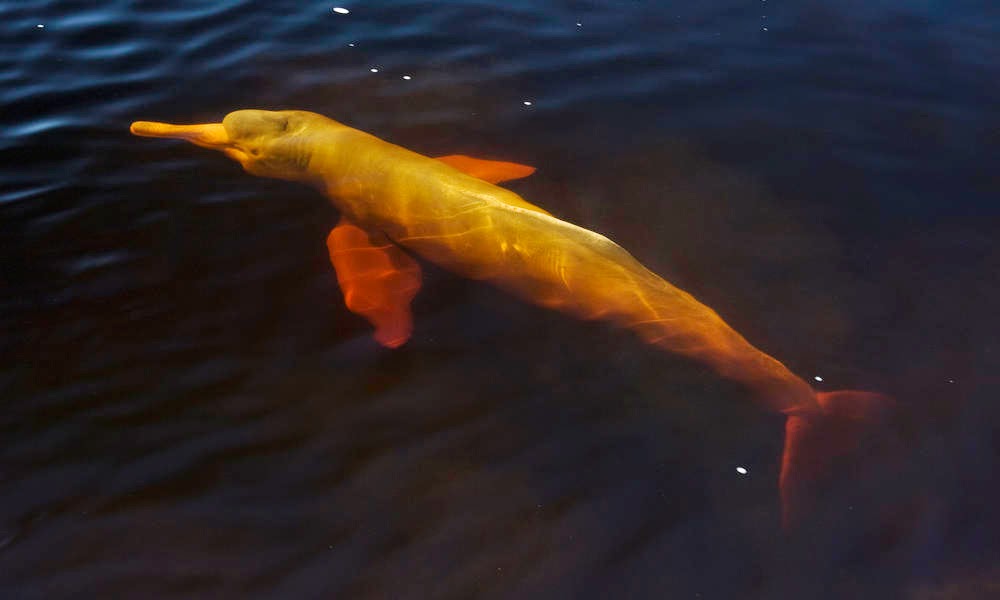
Amazon River Dolphin ( Inia geoffrensis)

  1. As the name implies the Amazon River Dolphin is found in freshwater systems in Brazil, Peru, Bolivia. Venezuela, Ecuador and Colombia. It's found in the river systems of the Orinico in the Amazon and the  Araguaia/Tocantins rivers.
  2. They are either colored light grey or pink which makes then unusual for cetaceans 
  3. It's the largest freshwater cetacean and can grow from 1.53-2.5 m and they weigh from 80-95kg. Females tend to be larger than males.
  4. They feed on fish and crusteceans and small turtles.
  5. They are specialised in hunting in murky waters and have really flexible necks and spinal cords in order to hunt and forage in underwater tree trunks.
  6. Their neck has an unfused neck vertebrate which allows them to turn their head 90 degrees and hence makes them highly flexible.
  7. Calves are born between July and September and usually one calf is born at a time.
  8. Gestation period lasts from 9 to 12 months.
  9. These dolphins are mostly blind, relying heavily on the sonar abilities to hunt for prey. More than usual dolphins do.
  10. Although originally considered Vulnerable by the IUCN Red List, due to the lack of data they are now not classified. However many believe that they are in extreme danger due to habitat loss.

Monday, 10 November 2014

Species of the week:Meerkat

Species of the Week:
Meerkat (Suricata suricatta)


  1. They are found in the Kalahari Desert, in the Namib Desert, southwest Angola and in South Africa.
  2. A Meerkat social group consists of about 20 members and it is called a clan, gang or mob.
  3. Meerkats hunt and forage during the daytime and sleep during the night.
  4. They are mostly insectivores but will attack and eat lizards,fungi, small mammals, eggs, scorpions, centipedes and millipedes, spiders and some plants.
  5. They are immune to a variety of venoms including the scorpion venom of the Kalahari desert.
  6. When Meerkats forage there is always one member of the clan that has sentry duty and looks out for predators. When one is spotted, the meerkat sounds the alarm and all the other clan members go into hiding.
  7. Meerkats can reproduce throughout the year but prefer warmer seasons to give birth too. Usually only the matriarch gets to breed however in larger groups for subordinate meerkats may secretly breed. These females are often chased away from the group and form their own clan.
  8. One to five pups are born with the most common number being three pups.
  9. Meerkats have been found to demonstrate altruistic behaviour and will often look after young that are not their own.
  10.  Meerkats are considered "Least Concern " under the IUCN Red List.

Sunday, 2 November 2014

Species of the week: Hen Harrier

Species of the week:
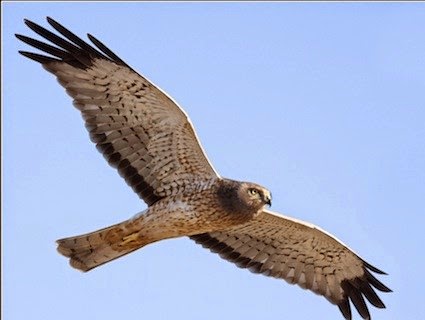
Hen Harrier(Circus cyaneus)


  1. They can be found in the Northern Hemisphere, in Northern Europe and Northern U.S.A and Canada.
  2. Hen harriers have  sexual dimorphism in their appearance. Males are pale grey//white while females are brown.
  3. They are about 40-52 cm long and has a wingspan of 97-122cm.
  4. They feed on small mammals and small birds and live in open areas.
  5. Hen harriers are migratory birds, migrating South for the winter. If they opt to stay at certain countries due to mild climate, they generally just migrate to lower altitudes.
  6.  It lays from four to eight eggs and the eggs are incubated from 30-32 days.
  7. The chicks become fledgelings at around 35-36 days old but do not fully mature until they are 2 years old if female or 3 years if male.
  8. They are the only hawk-like bird to practise polygyny.
  9. The males maintain a large territory in which they can be responsible for up to five females.
  10. They are considered "Least Concern"by the IUCN red list but in specific areas such in the U.K they are regarded as under threat due to human conflicts as gamekeepers shoot them since they influence Red Grouse populations.

Wednesday, 22 October 2014

Updates and blog organisation


So it's been about a month since I returned back to Aberdeen. Ever since then I have been struggling to get back to the normal routine since my dissertation and review essay are taking most of my time. This is a little post to just remind you that I am still active. Species of the week will return this Sunday and I will attempt to post something at least once a week apart from the Species of the Week.
Thank you so much for reading